
Master PMSM Design – Join Our Course on December 16, 2025 - Register Now!

Linear and Rotational Actuator Simulation with EMWorks

Design, size, and optimize electromagnetic actuators directly on your 3D models.

A Guide to Designing & Simulating Electromagnetic Clutches

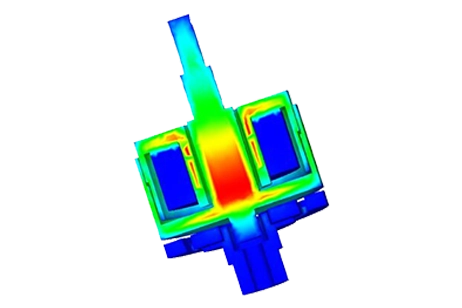
This example models an electromagnetic clutch where a wound coil pulls the armature toward the rotor to transmit torque. By coupling Magnetostatic with motion, you can compute flux density, force, and armature displacement over time and evaluate how air gap, coil current, and materials affect response and performance.

TEAM 20 DC Solenoid Static Force Benchmark with EMWorks

This note uses the EMWorks Magnetostatic module to simulate the TEAM 20 DC solenoid with a nonlinear MA2 steel core and 3000 A-turn coil, computing flux density and pull force and comparing average Bz and force with published benchmark measurements.

Linear Solenoid Motion Simulation with EMWorks

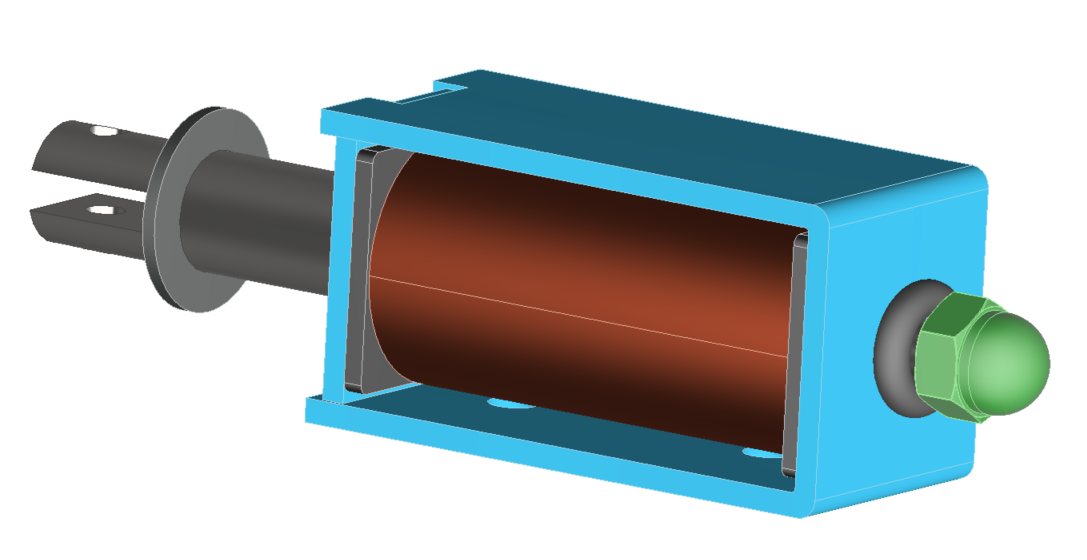
This application note shows how to simulate a linear solenoid in EMAG coupled. It covers material setup, meshing, loads, and post-processing of plunger force, displacement, flux density, and inductance versus position.

EMWorks Simulation Precision: A Comparison with TEAM 24 Benchmarks

This application note models the TEAM 24 switched reluctance test rig in EMWorks using a transient magnetic study. EN9 steel, copper coils, and air regions are assigned, with time-varying current excitation applied to the windings. The simulation computes magnetic flux density, eddy currents, and torque on the rotor, and the results are validated against TEAM 24 benchmark torque data.

Enhancing DC Linear Actuator Design with Electromagnetic Simulation

Discover how DC linear actuators convert electrical energy into motion using solenoid-based designs. This article shows how EMWorks 2D and 3D FEM match benchmark force results for clapper and plunger solenoids, helping engineers size coils, gaps, and materials with confidence.

How Ferrofluids Enhance Solenoid Actuators' Performance & Efficiency

This note analyzes a linear electromagnetic actuator with a ferrofluid-filled working gap, using linear and nonlinear carbon steel models. Flux density and magnetic force are evaluated versus plunger position and ferrofluid permeability, and compared against reference results.

Optimizing DC Actuator Performance with FEM Simulation

This note uses 2D magnetostatic FEM to model planar and axisymmetric DC solenoid actuators. Magnetic flux and force are evaluated versus air gap and current and compared with reference data.

A DC Contactor Design: Enhanced Efficiency and Reduced Noise

Application note on a DC contactor with a nonlinear ferromagnetic core and DC coil. Finite element analysis is used to compute flux density, magnetic force, and motion as functions of air gap length and coil current for switchgear design.

Optimizing T-Shaped Electromagnetic Actuators: A 3D FEM Study

This application note presents a 3D finite element study of a T-shaped electromagnetic actuator. It evaluates magnetic flux density, force versus ampere-turns and air gap, and computes plunger displacement and velocity, with results compared to experimental data.

Voice Coil Actuators for Precision Positioning Applications

A voice coil actuator based on the Lorentz force is analysed with 2D/3D finite element simulations to compute magnetic flux density, Lorentz force, inductance, back EMF, current response and mechanical output (displacement, speed, acceleration) under different DC voltage and current excitations. An electrothermal model evaluates winding losses and temperature rise, and all key quantities such as force and back EMF sensitivity are compared against published experimental data, including a brief comparison with solenoid actuator behaviour.

Can the Voltage Affect the Performance and Thermal Behavior of a Voice Coil Actuator

This note analyses a voice coil actuator with 3D finite element simulations, focusing on transient current and force response under different DC voltages and on electrothermal behaviour due to copper losses in the winding. The study reports current rise times, steady-state force at a fixed stroke, winding loss for 20 V and 200 V cases, and the resulting temperature distribution and evolution, highlighting the actuator’s electrical, mechanical and thermal limits.

Understanding Voice Coil Actuators: Key Performance Characteristics

This application note analyses a voice coil actuator with 3D finite element simulations, combining a static study and an electromechanical study. The static analysis computes magnetic flux, Lorentz force versus stroke and current, force sensitivity, inductance variation and back-EMF constant, with results compared to reference measurements. The electromechanical analysis evaluates coil position, speed and acceleration for different DC voltages, linking electrical excitation to dynamic response and confirming the actuator’s linear force–current behaviour and nearly constant inductance over the useful stroke.

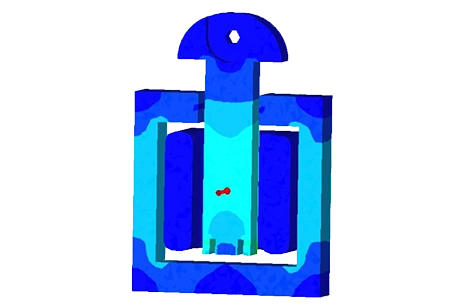
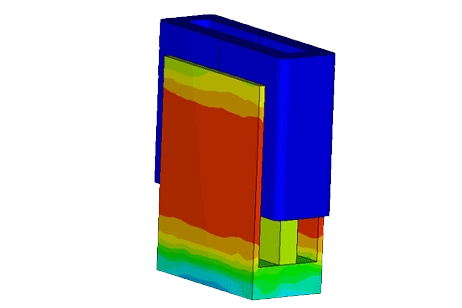
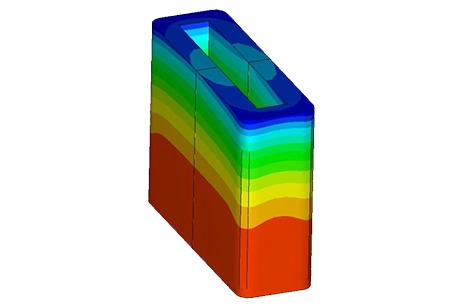
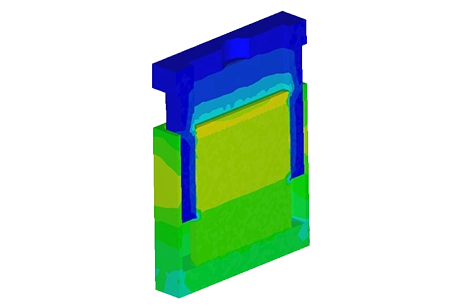
Optimizing DC Linear Actuator Performance: Effects of Coil Thickness & Input Current

Coupled electromagnetic–thermal FEM is used to predict coil losses, temperature rise, and design trade-offs in a DC linear actuator.

By visiting or using this website you agree to the storing of cookies on your device to enhance site navigation, analyze site usage, and assist in our marketing efforts. View cookies details.