

RF- und Mikrowellenfilter-Simulation
Entwerfen und validieren Sie RF- und Mikrowellenfilter.
-for-Satellite-Communications.webp)
Eine validierte Simulation der Streuparameter eines fünfpoligen H-Ebenen-Irisfilters.
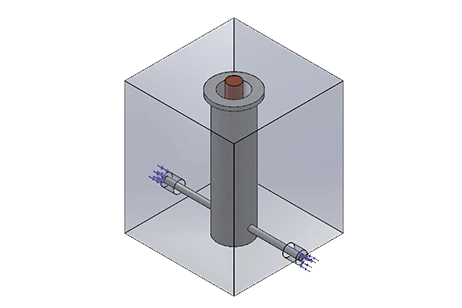
Eine validierte Streuparametersimulation eines Kombinationsfilters.
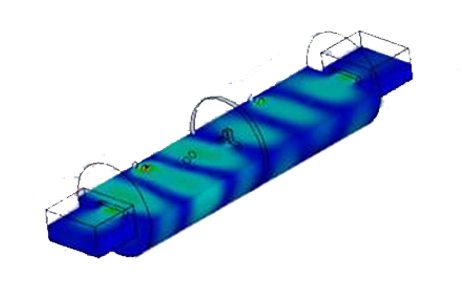
Circular Waveguide Filter Simulation für Satellitenkommunikationsanwendungen.
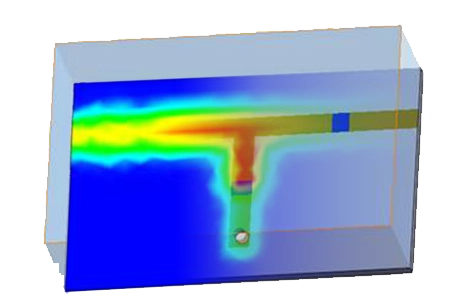
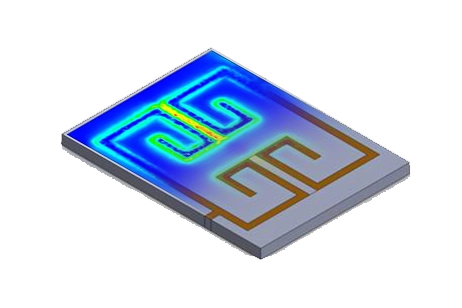
S-Parameter-Simulation eines Filters, der bei 2,5 GHz arbeitet und auf der Kopplung zwischen Mikrostreifenleitungen und vier Resonatoren basiert.
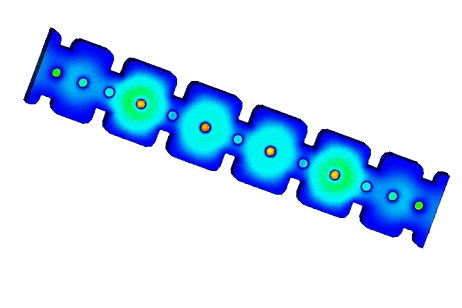
Beispiel für ein einstellbaren HF-Hohlraumfilter. Die Feineinstellung erfolgt durch Änderung der Schraubenabmessungen."""
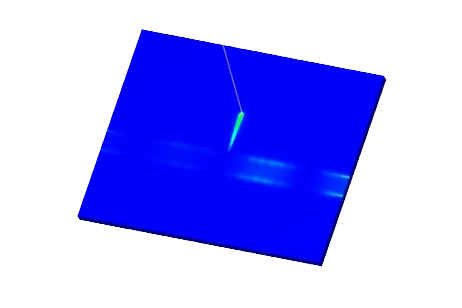
Bandsperren (BSFs) sind eine der unverzichtbaren Komponenten für Hochfrequenz- und Mikrowellenanwendungen. Sie werden in drahtlosen HF-Kommunikationssystemen häufig zur wirksamen Unterdrückung von Störsignalen und unerwünschten Breitbandstörungen verwendet, um den Durchgang gewünschter Signale zu ermöglichen.
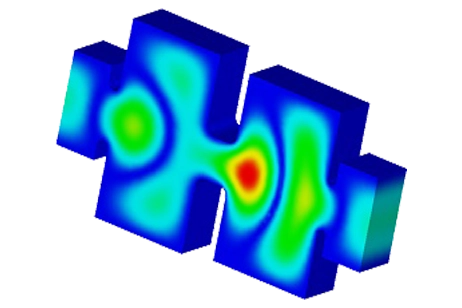
This note presents the design and 3D simulation of a compact 100 GHz rectangular waveguide band-pass filter with inductive irises and WR-10 interfaces. Using EMWorks RF & Microwave, the filter’s S-parameters and thermal behavior are evaluated over 94–106 GHz to confirm low loss, sharp rejection, and safe operating temperatures for demanding THz communication links.
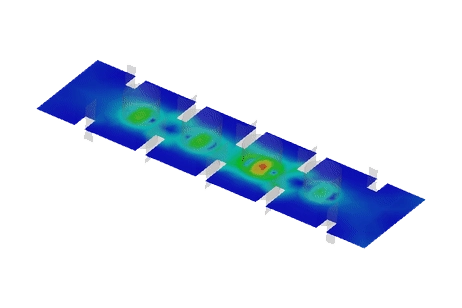
This application note analyzes a dielectric loaded rectangular waveguide H-plane filter operating from 10.5 to 11.5 GHz. A finite element S-parameters study is used to evaluate electric and magnetic field distribution, conductor and dielectric losses, and the resulting temperature rise in the cylindrical dielectric posts. The results show a return loss better than 18 dB over a 36% bandwidth and a maximum steady-state temperature of about 57 °C in the dielectric load under 1 W excitation.
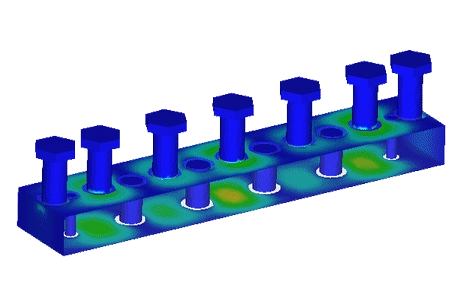
A 28 GHz mmWave waveguide band-pass filter with tuning screws is modeled and analyzed using EMWorks. The study reports S-parameters, electric field safety factors at high power, and the effect of screw penetration depth on return and insertion loss. Parametric results quantify how small changes in tuning screw depth shift the filter response within the 27–29 GHz band.