

Simulation von Magnetschwebefahrzeugen
Entwurf und Optimierung von Magnetschwebelagern, Führungen und Antriebssystemen in 3D
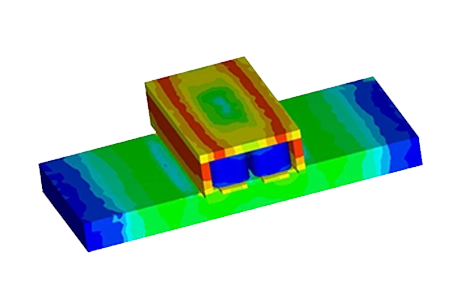
Eine Hebemaschine ist ein magnetisierter Satz von Stahlkomponenten, die als Elektromagnete zum Heben großer metallischer Gegenstände wie Metallschrott oder Stahlplatten dienen.
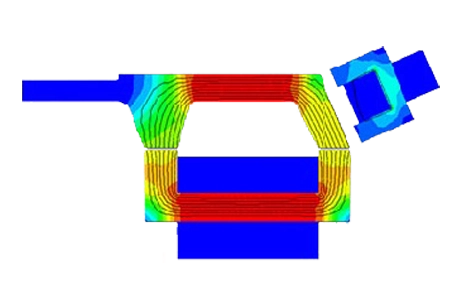
This article analyzes an electromagnetic levitation system for a semi-high-speed maglev train using EMWorks. It examines levitation and guidance forces versus airgap, current, and lateral deviation, then compares three design configurations to identify an optimized levitation layout.
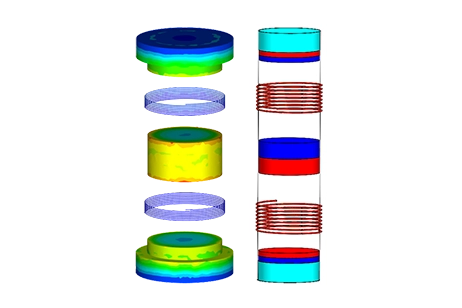
This application note explores magnetic levitation–based energy harvesters that convert ambient vibrations into electricity using floating magnets and coaxial coils. Several topologies—single-coil, bistable, and multi-coil/multi-magnet including Halbach configurations—are modeled in EMWorks to study restoring force, induced voltage, and magnetic flux density. The results show how simulation can optimize magnet layouts and coil arrangements to maximize energy capture, stability, and efficiency in compact renewable energy devices.
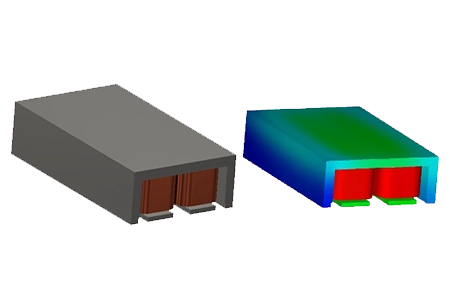
This note uses Autodesk Inventor and EMWorks to study an electromagnet lifting machine, evaluating force vs current, core saturation for different steels, and coil temperature rise.