Master PMSM Design – Join Our Course on December 16, 2025 - Register Now!

Accessible Electromagnetic Simulation Software

Start from existing CAD models or build geometry in the EMWORKS 3D environment to analyze motors, transformers, busbars, inductors and other low-frequency devices in one place.

Use a single environment for modeling, simulation and post-processing instead of handing models between separate tools, reducing the risk of inconsistencies between CAD and simulation models.

Why Engineers Choose the EMWORKS Platform

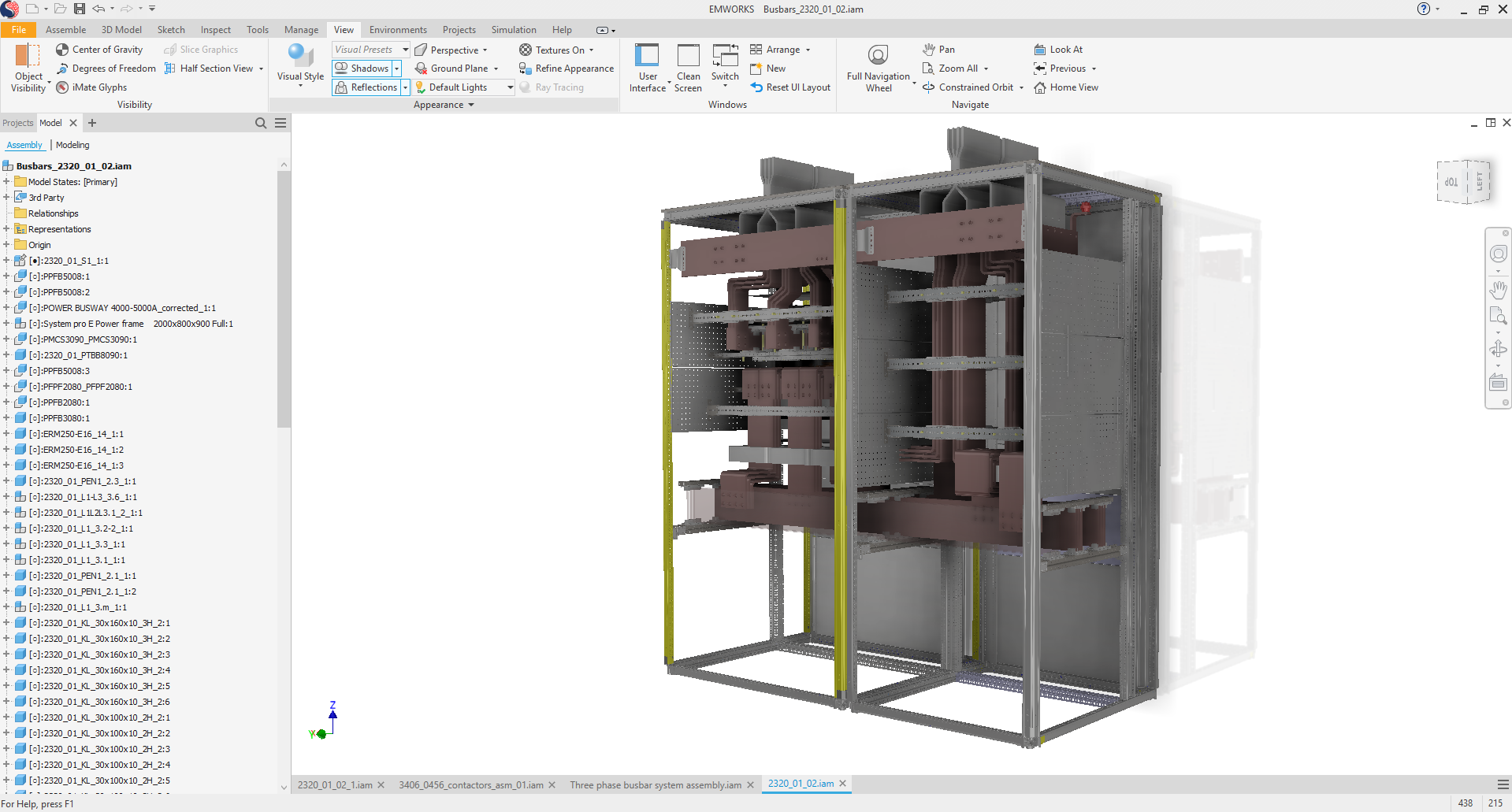
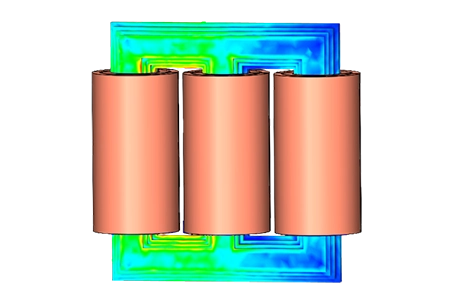
3D CAD model of a transformer core and coils created using Autodesk Inventor OEM inside the EMWORKS platform, demonstrating integrated modeling and simulation workflow.
Import 3D parts and assemblies from existing CAD tools using standard formats, or build geometry directly in EMWORKS. The original assembly structure is preserved so you can run electromagnetic studies without rebuilding models or maintaining multiple versions.
Analyze electromagnetic, thermal and structural effects on the same geometry. Losses and forces computed in EM studies can be used as inputs to thermal and structural analyses so you can evaluate temperature, deformation and safety factors within a single workflow.
EMWorks modules use finite-element solvers for low-frequency and RF electromagnetic problems. Our solvers will reproduce measurement data when models, material properties and excitation conditions are defined accurately, helping to reduce the number of physical prototypes.
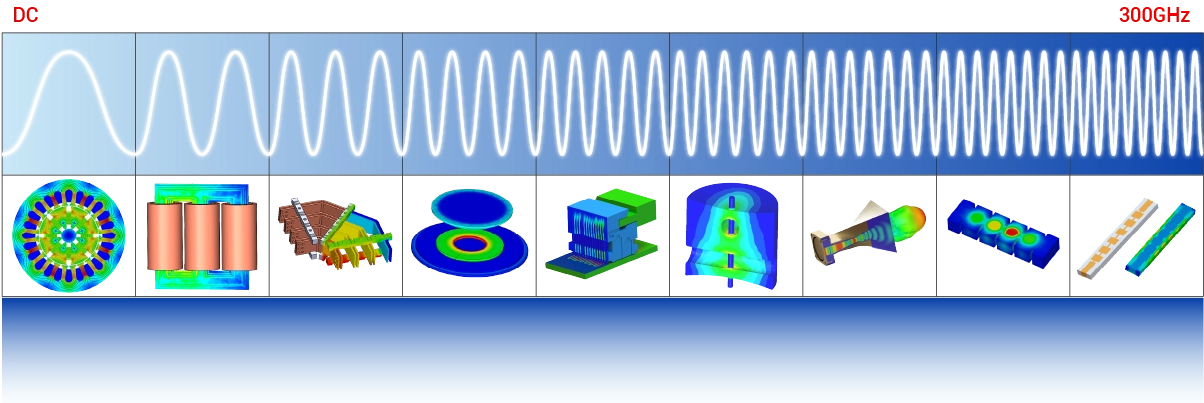
You have the flexibility to simulate what your project requires—whether it’s DC fields, mmWave designs, or anything in between.
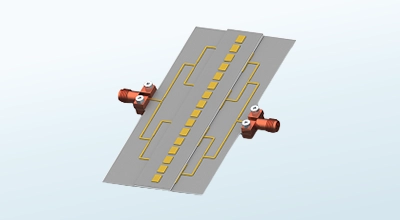
You can model low-frequency power devices like motors, transformers, solenoids, and busbars, as well as high-frequency RF, microwave, and mmWave components including antennas, filters, and high-speed interconnects—all in one environment.

+3,000 Engineers Trust EMWORKS

Our Featured Applications

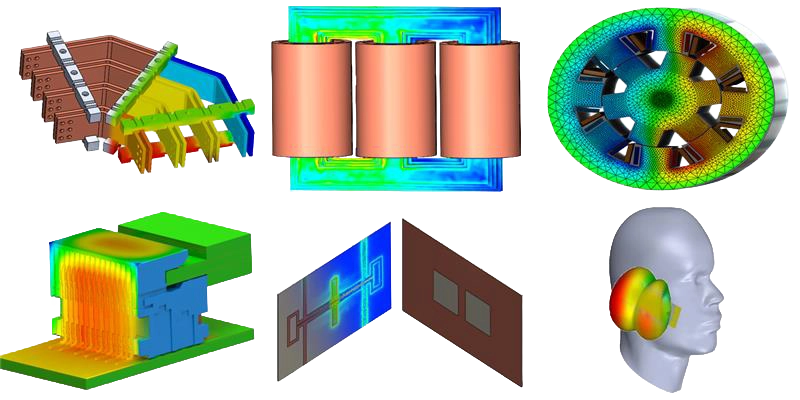
Examples of real electromagnetic systems engineers simulate with EMWORKS.
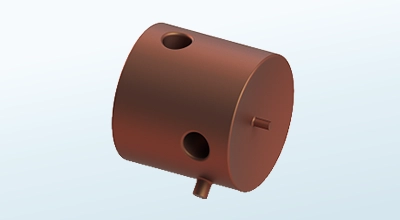
emag application

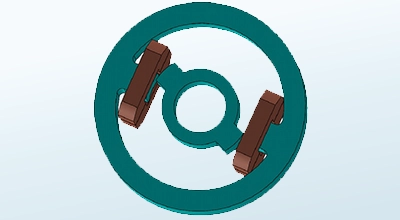
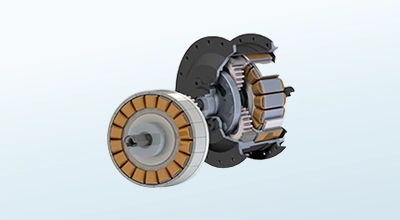
Motors and Generators

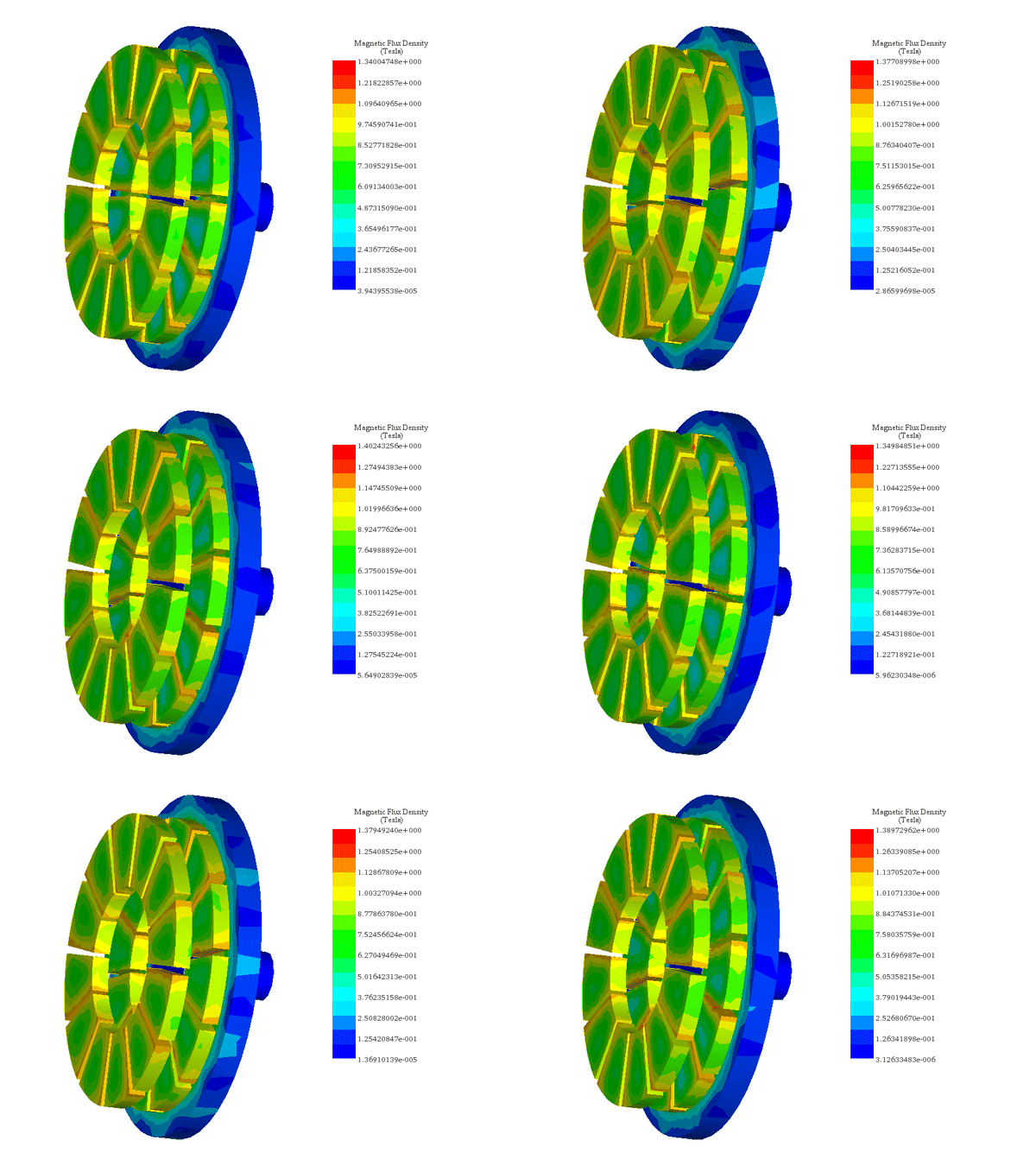
Analyze torque, cogging, core and copper losses, and demagnetization in permanent-magnet, induction, and synchronous-reluctance machines for steady-state and transient operating points.
emag application

Transformers and Inductors

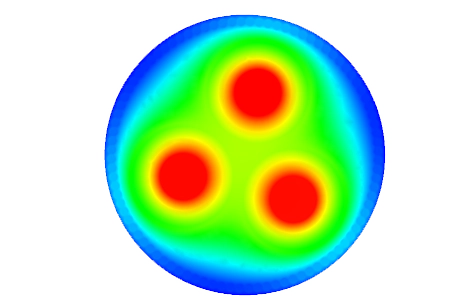
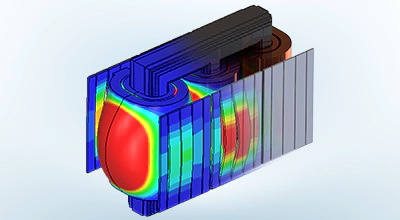
Compute flux distribution, saturation, leakage inductance, core losses, and stray fields in single- and three-phase transformers, chokes, and inductors, including different core materials and winding layouts.
emag application

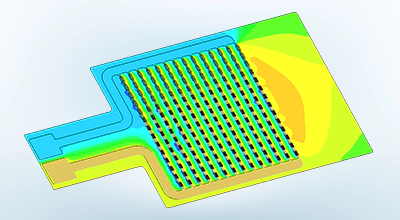
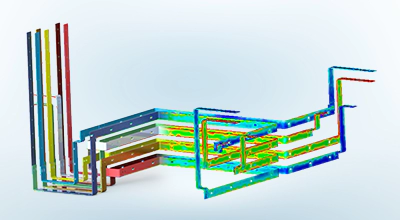
Busbars and Power Distribution

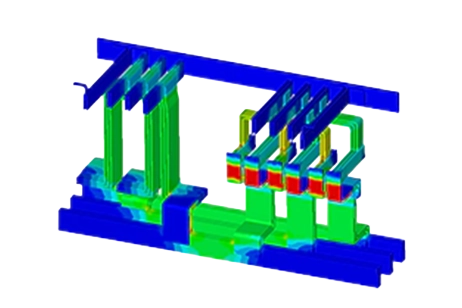
Evaluate DC and AC current distribution, skin and proximity effects, electromagnetic forces, and joule losses in busbars, switchgear, and high-current connections, with optional thermal coupling for temperature rise.
emag application

Actuators and Solenoids

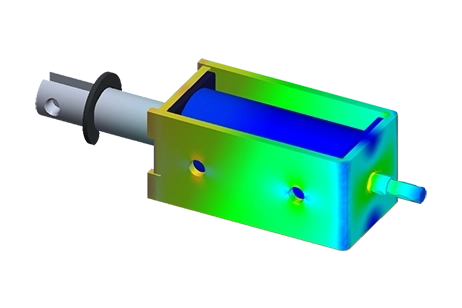
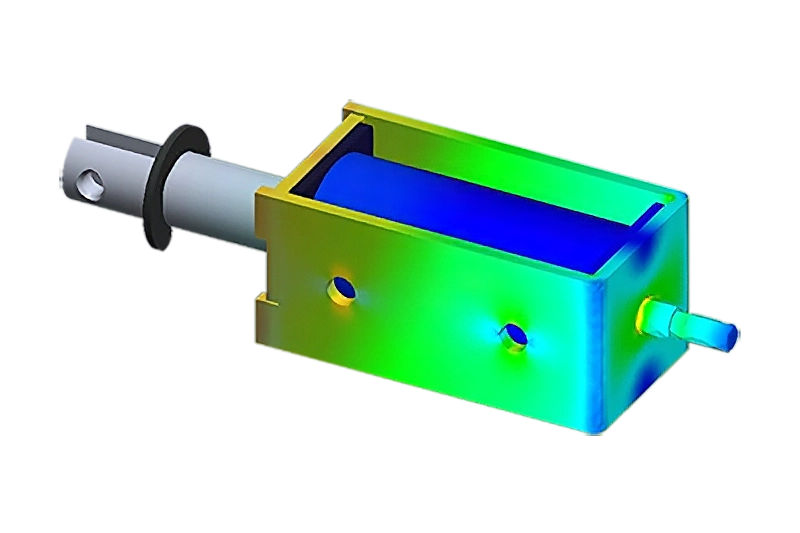
Predict forces, strokes, and response times for solenoids, relays, contactors, linear actuators, and position or speed sensors based on detailed coil, core, and air-gap geometry.
emag application

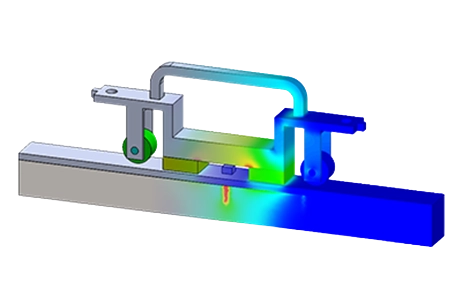
Eddy-Current NDT

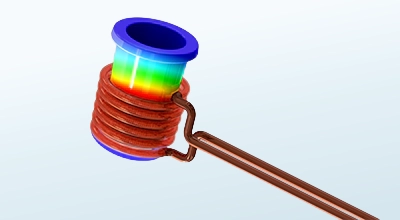
Model probes, cracks, and conductive targets to study signal changes in eddy-current testing, or compute braking torque and heating in eddy-current brakes and dampers.
emag application

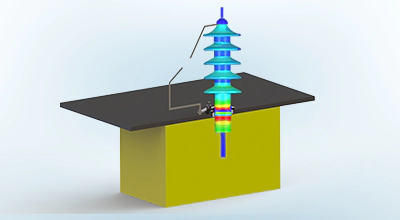
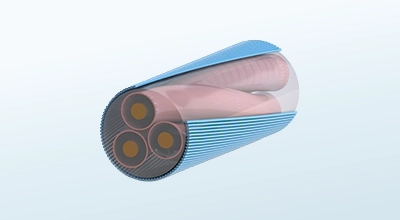
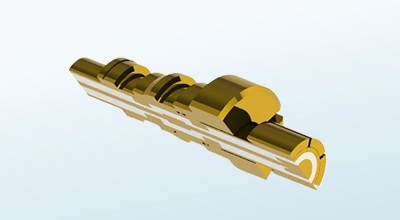
Power Cables and High-Current Conductors

Simulate electric and magnetic fields, insulation stress, losses, and temperature in LV/MV/HV power cables, bus ducts, and large conductors, including effects of layouts, shields, and proximity to other structures.
See more examples on the all EMAG applications page, including wireless power transfer, magnetic gears, magnetic bearings, shielding, MRI and gradient coils, and other specialized low- and medium-frequency designs.

Need Help with Your Electromagnetic Simulation Project?

Our engineering team can answer technical questions, discuss your design challenges, and guide you through the evaluation or simulation workflow.

Interested in partnerships? Learn about our Channel Partner Program

Core Solvers

EMWORKS provides finite-element solvers for low-, medium-, and high-frequency electromagnetic behavior, with optional coupling to motion, thermal, and structural evaluations.

EMAG

Magnetostatic

Calculates DC magnetic fields, forces, flux paths, and saturation levels.

Electric Conduction

Evaluates steady-state current flow and resistive behavior in conductive materials.

Electrostatic

Computes electric field distribution under static voltage and charge conditions.

AC Magnetic

Solves sinusoidal magnetic fields and frequency-dependent electromagnetic effects.

Transient Magnetic

Analyzes time-varying magnetic fields driven by switching waveforms or pulse excitations.

AC Electric

Models alternating electric fields in conductive and dielectric media.

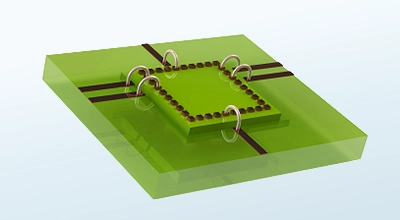
RF & Microwave

S-Parameters

Compute scattering parameters for circuits and components, including insertion loss, return loss and isolation. Use these results to assess matching, bandwidth and overall RF performance.

Resonant Modes

Identify resonant frequencies and field distributions in cavities, resonators and filter structures. This helps set dimensions and materials to achieve the required frequency response.

Wave Propagation

Evaluate radiation patterns, gain, efficiency and impedance of antennas and arrays. Study the effect of ground planes, radomes and nearby structures on antenna performance.

Time-Domain Full-Wave

Analyze transient behaviour in interconnects and components, including reflections from discontinuities, crosstalk and dispersion in high-speed signal paths.

Multiphysics

Motion Coupling

Couple electromagnetic fields with motion to compute force and torque vs position or time in motors, actuators, solenoids, relays and magnetic devices.

Structural Coupling

Map electromagnetic forces and losses to structural and thermo-mechanical analysis to evaluate displacement, stress, strain and safety factors.

Thermal Coupling

Link electromagnetic losses to steady-state or transient thermal analysis to compute temperature, gradients and heat flux, with optional temperature-dependent EM properties.

Circuit Coupling

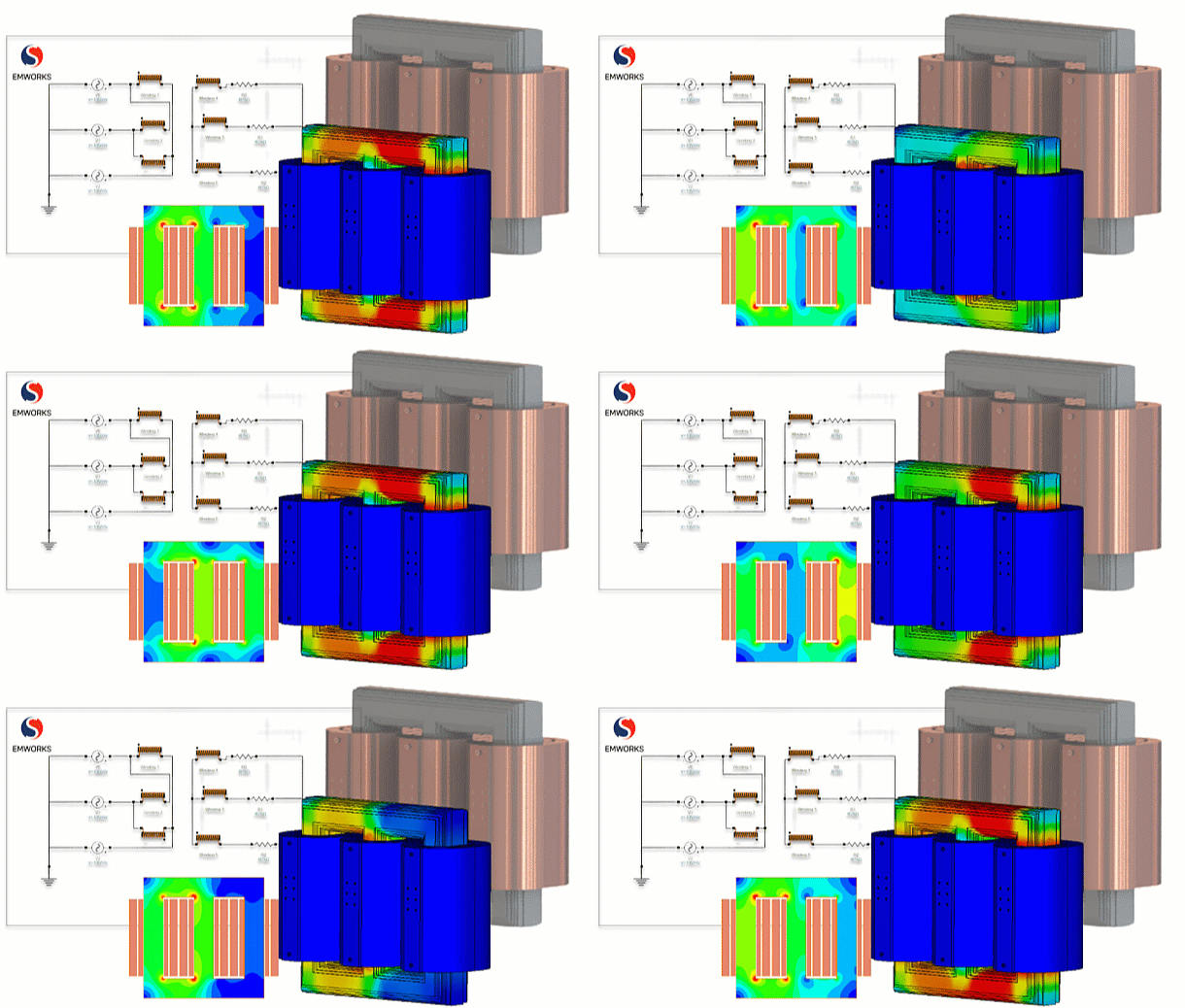
Circuit Coupling in EMWORKS integrates the 3D electromagnetic model with an electrical schematic. This two-way interaction accurately simulates devices like motors and transformers under transient and steady-state conditions, capturing effects such as back-EMF and saturation.

Motors

Analytical

Provides fast estimates of back-EMF, resistance, and core loss using simplified machine models.

Semi-Analytical

Combines analytical expressions with field data to approximate inductance and steady-state behavior.

Finite Element Analysis

Evaluates detailed electromagnetic fields, waveform quality, losses, and torque profiles using full FEA.
By visiting or using this website you agree to the storing of cookies on your device to enhance site navigation, analyze site usage, and assist in our marketing efforts. View cookies details.