
EMAG – Low- to Medium-Frequency Electromagnetic Simulation
EMAG is the low- to medium-frequency electromagnetic simulation module in EMWORKS. It is used to analyze fields, losses and forces in 2D and 3D models of devices such as electrical machines, actuators, sensors and transformers, in applications across automotive, aerospace, biomedical and power systems.
.webp)
EMAG Overview
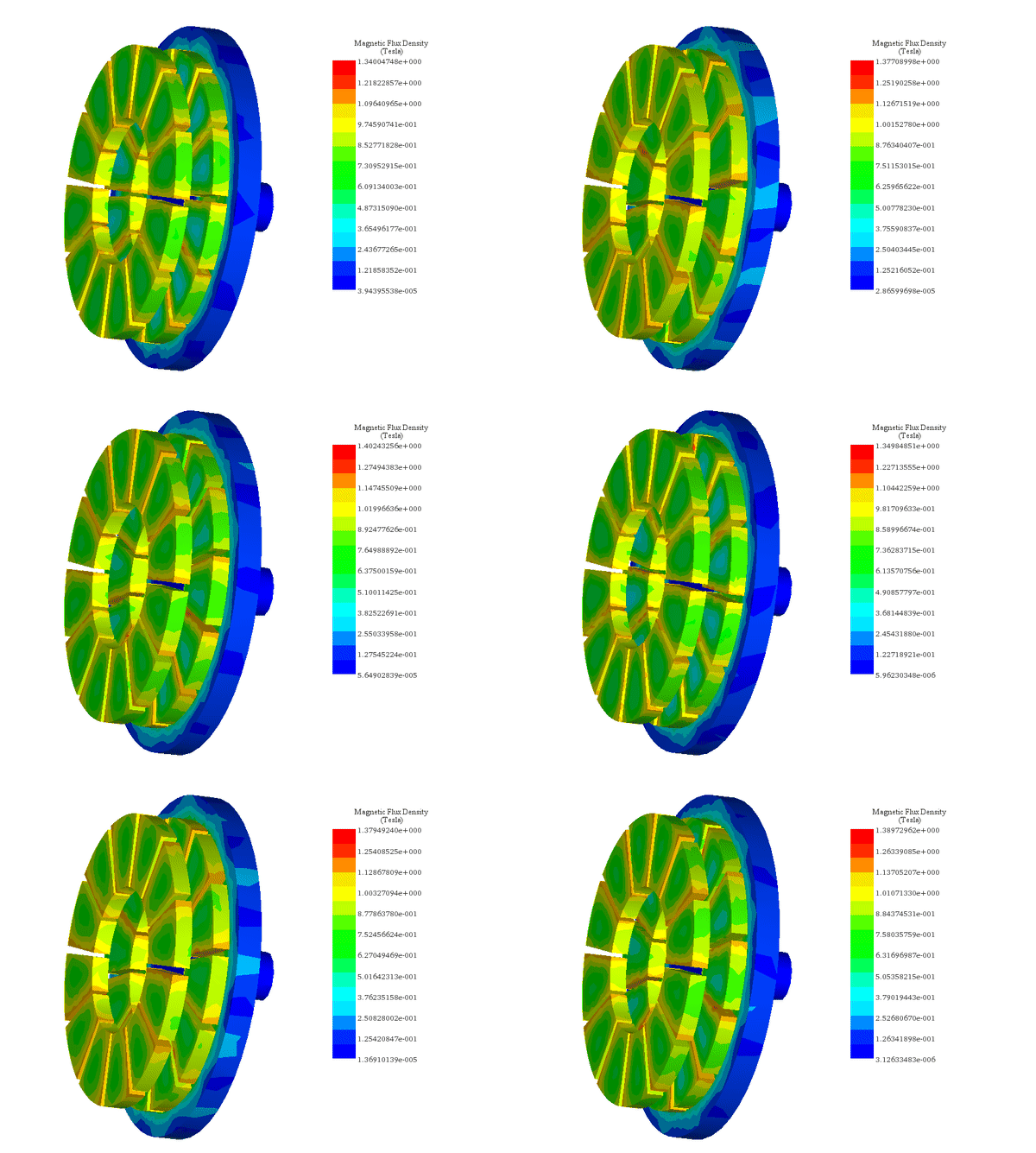
EMAG performs low- to medium-frequency electromagnetic field analysis on 2D and 3D models such as motors, actuators, transformers, and sensors. It handles coils, permanent magnets, conductors, and ferromagnetic parts in full 3D or 2D/axisymmetric setups, with optional parametric sweeps and thermal or structural coupling. Results include fields, flux density, current density, losses, forces, and torques over the geometry for direct comparison of design options.
EMAG Analysis Options
AC Magnetic Analysis
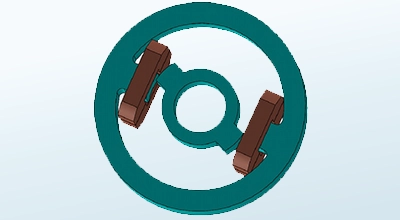
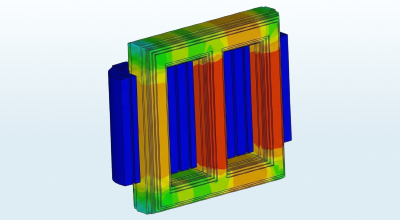
Solves sinusoidal magnetic fields and frequency-dependent electromagnetic effects.
Transient Magnetic Analysis
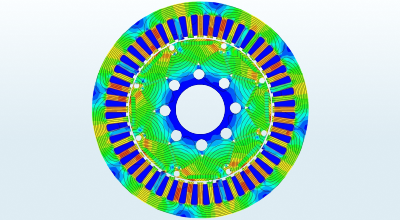
Analyzes time-varying magnetic fields driven by switching waveforms or pulse excitations.
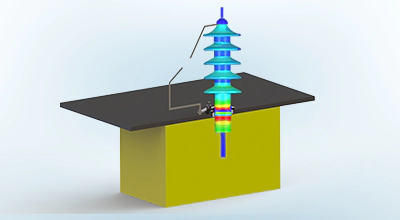
Electrostatic Analysis
Computes electric field distribution under static voltage and charge conditions.
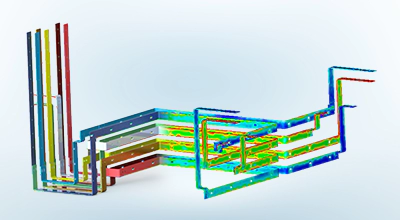
Conduction Analysis
Evaluates steady-state current flow and resistive behavior in conductive materials.
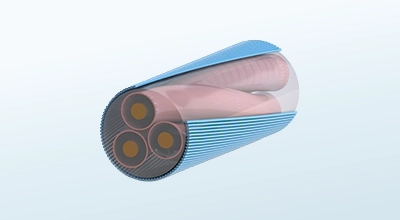
Start a Free EMAG Trial
Use EMAG to analyze electromagnetic fields, losses, and forces on your 2D and 3D designs with CAD-based workflows.
Multiphysics Coupling
EMAG couples electromagnetic analysis with motion, structural, and thermal solvers for devices where fields interact with mechanics and temperature.
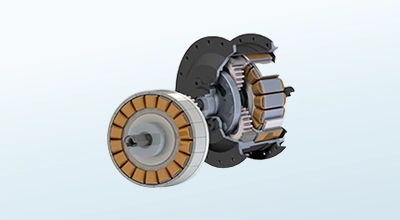
Motion Coupling
Couple electromagnetic fields with motion to compute force and torque vs position or time in motors, actuators, solenoids, relays and magnetic devices.
Structural Coupling
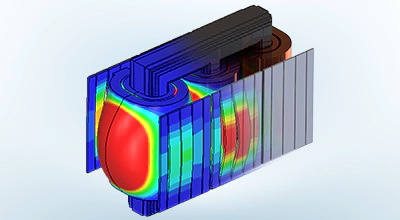
Map electromagnetic forces and losses to structural and thermo-mechanical analysis to evaluate displacement, stress, strain and safety factors.
Thermal Coupling
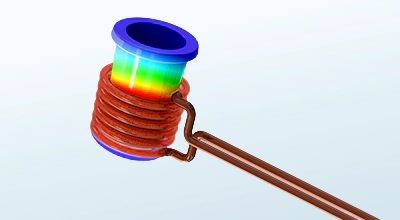
Link electromagnetic losses to steady-state or transient thermal analysis to compute temperature, gradients and heat flux, with optional temperature-dependent EM properties.
.gif)
Circuit Coupling
Circuit Coupling in EMWORKS integrates the 3D electromagnetic model with an electrical schematic. This two-way interaction accurately simulates devices like motors and transformers under transient and steady-state conditions, capturing effects such as back-EMF and saturation.
EMAG Applications
Motors and Generators
Transformers and Inductors
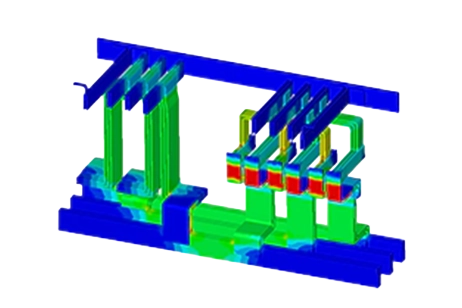
Busbars and Power Distribution
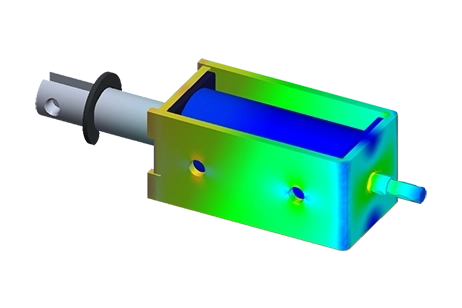
Actuators and Solenoids
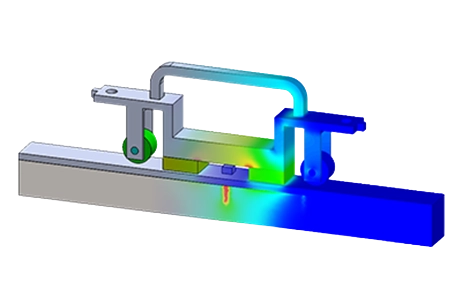
Eddy-Current NDT
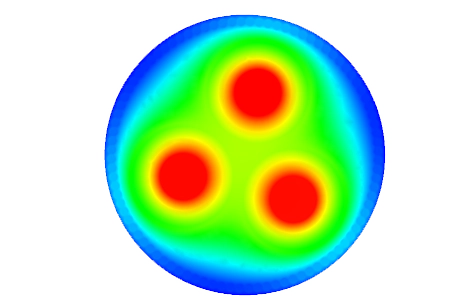
Power Cables and High-Current Conductors
EMAG FAQs
EMWORKS EMAG is EMWorks finite-element solver for low- to medium-frequency electromagnetic simulation. Engineers use it to design and validate electric machines, transformers, actuators, sensors, and other electromechanical parts, covering static, AC, and transient magnetic and electric field problems in 2D, 2D axisymmetric, and full 3D.
EMWORKS EMAG goes beyond isolated field analysis through Circuit Coupling, which links the 3D field model to an electrical schematic in a bidirectional simulation. This captures real operating behavior, including back-EMF and saturation, under both transient and steady-state conditions, so component-level results translate directly into system-level insight.
EMWORKS EMAG works alongside EMWORKS thermal, structural, and motion analysis tools, plus EMWORKS RF & MICROWAVE for devices that span both low and high-frequency behavior. Forces and losses computed in EMWORKS EMAG carry over directly as loads for thermal and structural studies on the same model.
Models can be built natively in EMWORKS integrated CAD, powered by Autodesk Inventor, or brought in from external CAD systems with assembly structure intact. Everything, modeling, solving, and post-processing, stays in one environment, so there's no version drift between the CAD file and the simulation. Parametric geometry makes it straightforward to run design sweeps.
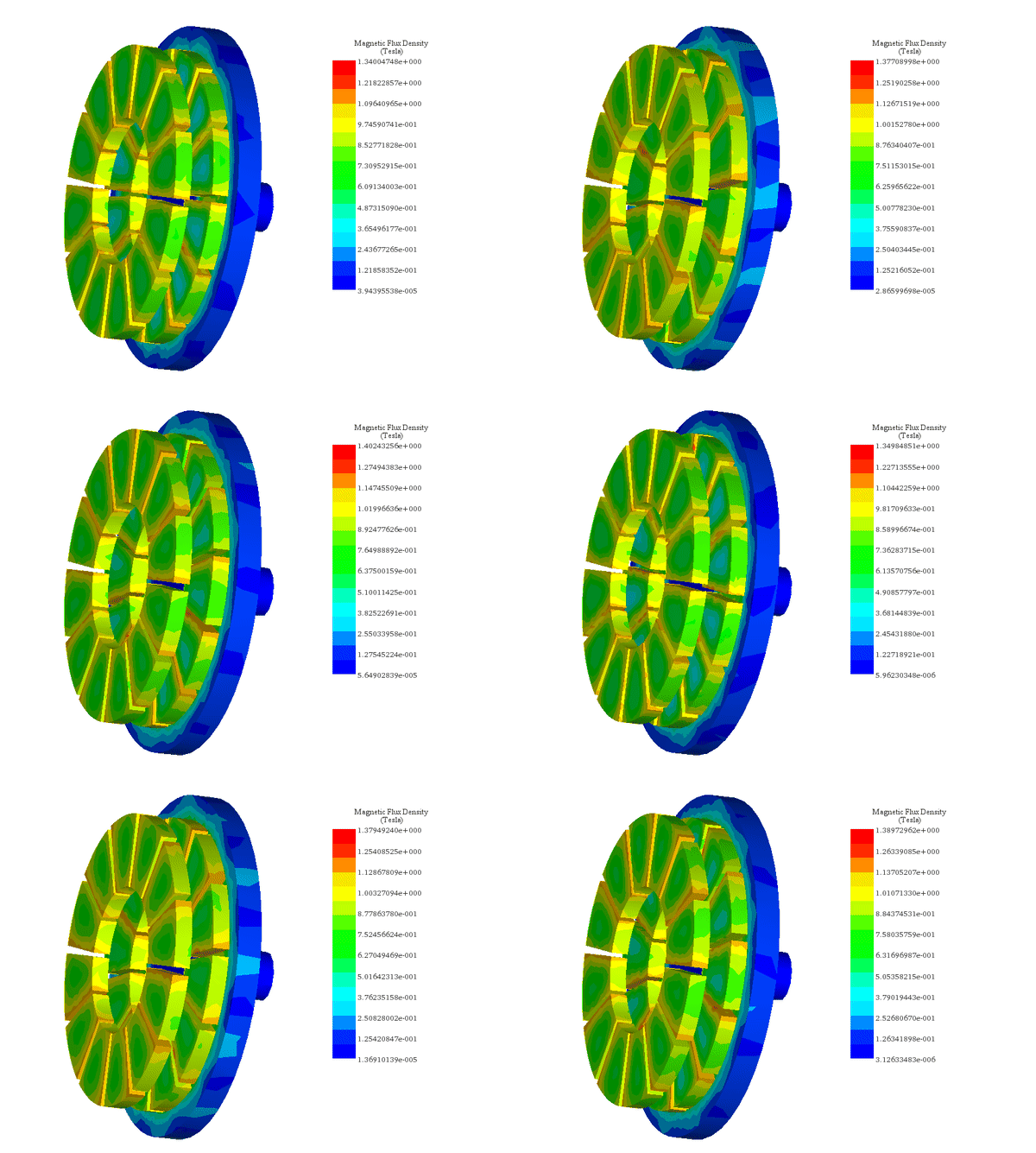
EMWORKS EMAG calculates torque, cogging, core and copper losses, and demagnetization risk for permanent-magnet, induction, and synchronous-reluctance machines, at both steady-state and transient operating points. This supports efficiency and reliability improvements for motors used in automotive, aerospace, industrial, and energy applications.
EMWORKS EMAG covers a wide span of low- and medium-frequency electromagnetic problems, including:
- Electrical Machines: motors, generators, actuators, solenoids
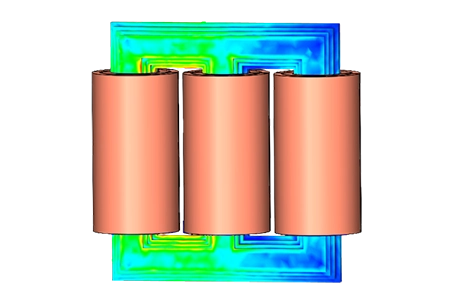
- Power Systems: transformers, busbars, and power-electronics components
- Sensors & Biomedical Devices: magnetic sensors and actuator-driven medical equipment
Because CAD, simulation, and post-processing live in a single environment, EMWORKS EMAG shortens the iteration loop between design changes and simulation results. That means fewer physical prototypes, faster evaluation of design alternatives, and earlier detection of performance issues in the design cycle. In line with EMWORKS focus on accessible electromagnetic simulation, the bundled CAD-plus-solver license puts electric machine and power-device analysis within reach of smaller engineering teams, not just large organizations with dedicated simulation budgets.
EMWORKS EMAG ships as part of the EMWORKS software suite and is available as a free trial through the EMWorks website.