

EMWorks による平面プリントアンテナシミュレーション
無線および RF システム向けの PCB アンテナおよび集積アンテナの設計・チューニング。
.webp)
世界は、特にワイヤレス通信システム内で、電気通信技術の高度な進歩を経験しています。これは、コミュニケーションとビジネス ネットワークの改善という点で、人々のライフスタイルの根本的な変化をサポートする、最も新しくダイナミックな分野の 1 つです。"
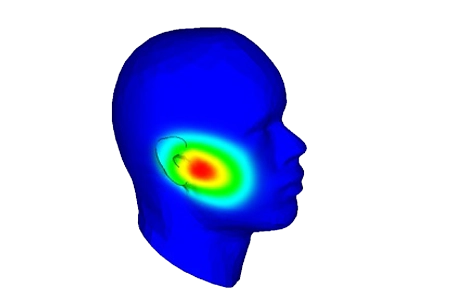
携帯およびスマートフォンのアプリケーションに使用されるアンテナは、無線通信の進歩的なニーズに適応するために、大規模かつ急速な発展を遂げてきました。これらの改善は、3G、4G、および 5G テクノロジーの展開に続いています。一方で、電磁界が人体に与える健康への悪影響に注目が集まっています。放射場の安全性は、多くの議論と研究の関心事でした。"
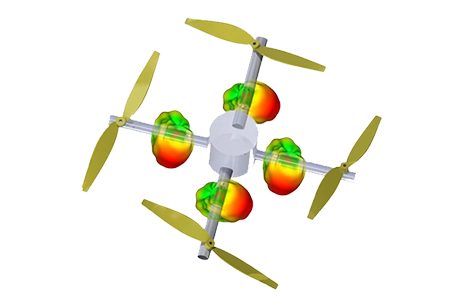
近年、無人航空機 (UAV) またはドローンは、軍事、公共サービス、商業、さらには個人を含む多くの多様な業界や組織によって広く採用されています。ドローンが飛行し、物体を運び、自律的に飛行する能力により、この技術はさまざまな形で人生を変えてきました。"
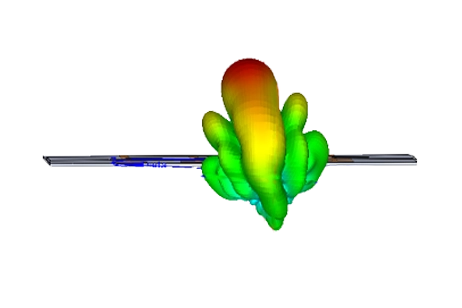
This application note presents the design of a compact 60 GHz patch antenna array with parasitic elements tailored for integration into Google Glass. The study compares configurations with and without parasitic elements, showing improved radiation patterns and elimination of nulls around 60° when parasitics are used. It also analyzes how mounting the antenna on Google Glass shifts the resonant frequency while preserving robust radiation performance, thanks to a full ground plane that isolates the antenna from the frame. The result is a wearable antenna solution that delivers reliable wireless connectivity in realistic smart-glasses environments.
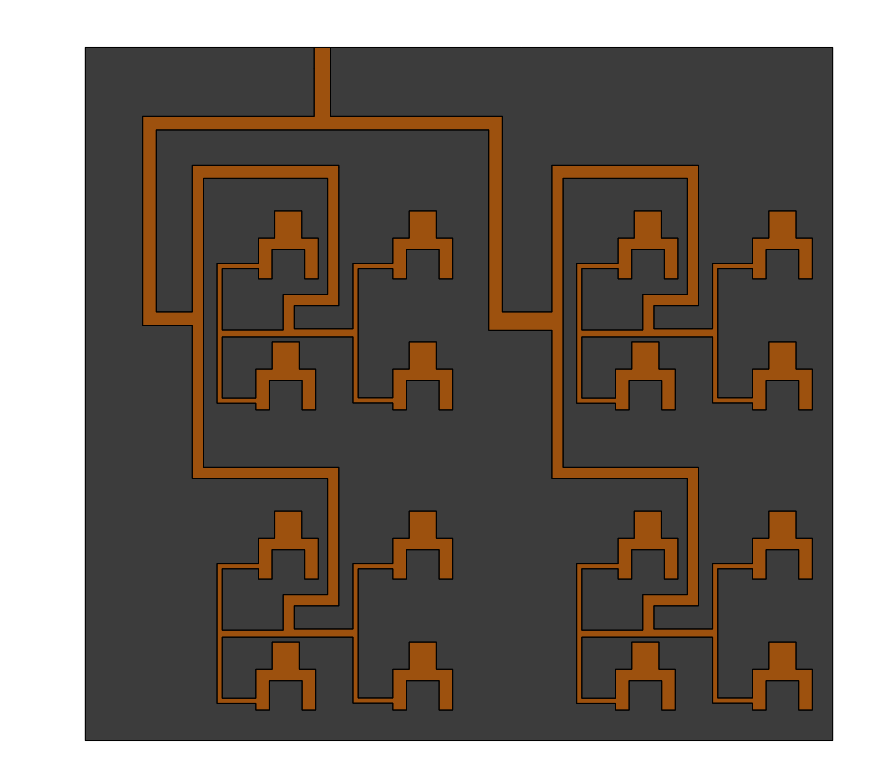
This application note shows how EMWorks is used to design and optimize 5G mmWave antenna arrays. Starting from a single patch and scaling to 8×8 and 8×32 arrays, it highlights return loss, gain, and far-field metrics needed for high-gain 5G base-station antennas.
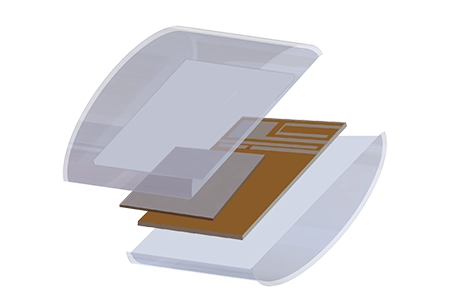
Design a compact printed inverted-F PCB antenna for IoT devices that operates over LoRa 915 MHz and GPS L1/L2 bands. This note shows how EMWorks simulations guide strip and slot tuning, account for casing and battery impact, and evaluate VSWR, efficiency, and radiation patterns.